
A bucket teeth scrape hits something it should not, the street heaves, and within minutes a quiet
New York block turns into a chaos of flashing lights, angry business owners, and utility crews. For excavation companies, that kind of scene is not hypothetical. It is the kind of bad day that can swallow a year of profit if insurance is not tailored to the risks of digging in one of the most complex construction environments in the country.
The scale of excavation work and why it changes your risk
Excavation may look like a supporting trade from the outside, but the numbers tell a different story. The excavation contractors industry in the United States is projected to generate 145.4 billion dollars in revenue, with forecasts calling for a 2.5 percent increase in the coming year according to industry research from IBISWorld. That kind of volume means more jobs, more crews in the field, and far more chances for something to go wrong. As road building ramps up under the federal Infrastructure Investment and Jobs Act, analysts also note that road construction activity has increased, which directly benefits excavation contractors and keeps workloads high based on IBISWorld analysis of the sector.
New York sits right in the middle of this surge. From large scale highway improvements to tight infill development in the five boroughs, excavation companies are being asked to dig deeper, faster, and in more challenging places than ever. Each project stacks multiple layers of exposure on top of one another, from underground utilities and neighboring structures to pedestrians and traffic only a few feet away. General commercial insurance is rarely built with this kind of risk profile in mind, which is why specialized coverage is so important for excavation operations that want to protect their balance sheets as they grow.

Why excavation work in New York is uniquely risky
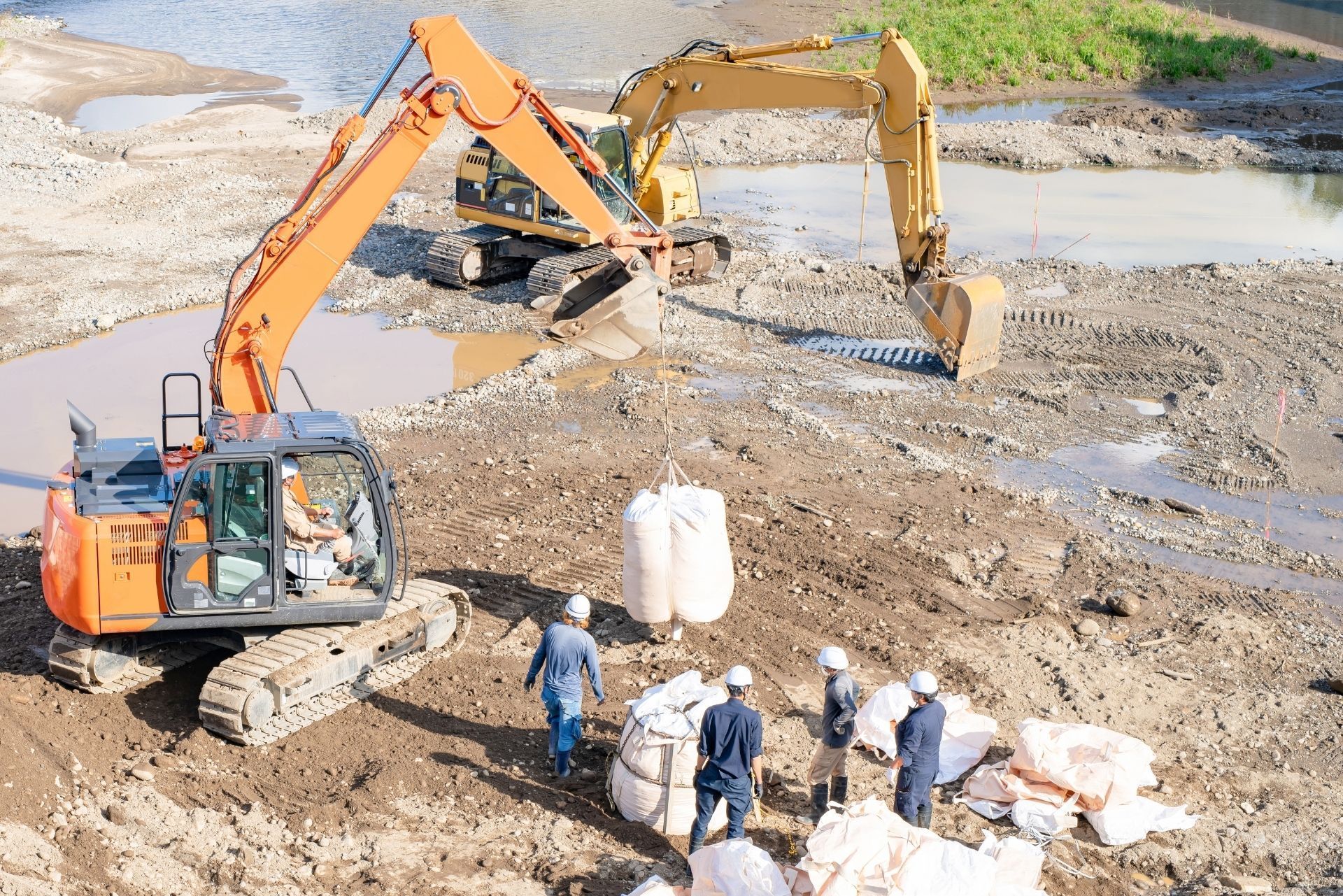
New York combines dense urban build out, aging infrastructure, and extreme weather swings, which creates a risk profile that looks very different from wide open sites in other states. Digging in Manhattan or Brooklyn often means working inches from gas lines, transit tunnels, fiber optic cables, and fragile foundations that have settled for generations. Even in suburban or upstate counties, old utility maps can be incomplete or inaccurate, so a routine trench can still turn into a complex emergency if a line is struck or groundwater floods the excavation.
The legal environment matters as much as the physical one. Property values are high, neighbors are close, and project owners tend to be sophisticated. A small mistake can quickly lead to claims for business interruption, loss of use, or structural damage that are far larger than the actual cost of repairs. New York labor and construction laws also shape how liability is allocated on job sites, which means excavation contractors often find themselves pulled into lawsuits even when they feel they followed the plan and did everything right. Without the right wording and limits, standard liability policies can be stretched thin by this combination of exposure and litigation risk.
There is also the relentless pressure of tight schedules. City agencies, private developers, and infrastructure owners expect minimal disruption to traffic and neighboring properties, so excavation work is often compressed into narrow time windows. Crews work around traffic, pedestrians, and other trades, all while trying to coordinate deliveries, haul off spoils, and manage shoring. This pace increases the chance of bodily injury, collisions, and
property damage. Specialized insurance responds not just to the fact that accidents happen, but to the reality that the fallout of those accidents in New York can be unusually expensive and complex to resolve.
What specialized excavation insurance actually covers
Specialized excavation insurance is not a single policy. It is a coordinated set of coverages designed to track the actual flow of risk across a project, from bid and design through backfill and demobilization. General liability is usually the starting point, because it covers bodily injury and property damage claims from third parties who might be hurt or suffer loss as a result of excavation activities. For example, if a sidewalk caves in near an open trench and a pedestrian is injured, or vibrations from a compactor crack a neighboring foundation, this is often where the claim lands.
Beyond that, many excavation companies carry contractors equipment insurance to protect their heavy machinery, attachments, and tools. Excavators, mini excavators, skid steers, trenchers, and shoring systems represent huge capital investments. Damage from collisions, overturns, theft, or vandalism can sideline a crew and force expensive rentals just to keep a schedule moving. Specialized forms for contractors equipment are built around mobile gear that is constantly moving between job sites, not just contents stored at a fixed location, which is why they tend to perform better than a generic property add on.
Excavation focused programs also typically include coverage for errors in locating and marking utilities, and in some cases limited protection for damage to work in progress or underground property. These are areas where exclusions and sublimits are common, so an insurance partner that understands the realities of digging can help close critical gaps. As one specialty agency notes, excavation work comes with its own set of risks and challenges, and excavation insurance exists precisely because those risks do not fit neatly inside off the shelf contractor policies as explained by Sarvis Insurance Agency.
Coverage for your people and vehicles
Insurance for an excavation company is not complete without robust protection for the people doing the work. Workers compensation is legally required when employees are on payroll, but the nuances matter. Excavation involves trenches, heavy lifting, machine operation, and exposure to traffic, all of which drive different injury patterns than a typical interior trade. Strains from handling trench boxes, crush injuries, falls into excavations, and struck by incidents from moving equipment are all real possibilities. A well structured workers compensation program helps ensure injured employees receive prompt medical care and wage replacement while protecting the company from direct out of pocket costs.
Commercial auto coverage is just as essential. Dump trucks, lowboys, pickups, and service vehicles are constantly on the road, often in congested city traffic. Collisions can lead to bodily injury claims, property damage, and environmental exposure if loads or fluids spill. Auto liability limits need to reflect the fact that these vehicles may be hauling spoil, aggregates, or heavy loads through residential neighborhoods and business districts. Higher limits and umbrella coverage are common for excavation fleets, especially where contracts require proof of substantial overall liability capacity.
Niche protections excavation firms often overlook
Specialized excavation insurance also reaches into several areas that many contractors only discover after a near miss or denied claim. Pollution liability is a prime example. Disturbing contaminated soil, rupturing an underground storage tank, or causing a fuel spill can trigger environmental claims that extend far beyond simple cleanup. Dedicated pollution policies or endorsements tailored for contractors help address this exposure. Similarly, some excavation companies benefit from professional liability coverage for design build work or for offering constructability input that project owners may rely on when planning earthwork and shoring.
Inland marine coverage for tools and materials in transit, business interruption coverage to replace lost income after a covered event, and cyber coverage for firms that rely heavily on project management software or digital plans are increasingly common. The exact package will depend on the size of the firm, project mix, and appetite for retaining risk. Specialized brokers and underwriters look at these elements together, rather than trying to bolt excavation work onto a generic general contractor template.
New York specific factors that shape excavation insurance
New York is not just another large market for excavation work. Industry analysts describe the excavation contractors sector in the state as a significant contributor to the local economy, with a large number of businesses and employees operating across urban and rural counties according to IBISWorld coverage of the New York market. That scale influences how insurers view the region. On one hand, there is plenty of premium volume, which attracts specialty carriers and brokers. On the other, there is a long history of large claims, strict safety regulations, and active plaintiffs bars, all of which make underwriters cautious.
City specific issues also come into play. In New York City, excavation jobs often abut transit assets, landmark structures, or critical utilities. Project owners and municipalities respond with detailed insurance requirements, including high liability limits, project specific policies, additional insured status for large lists of stakeholders, and waiver of subrogation clauses. Insurers that are not familiar with this environment may hesitate or price coverage aggressively, while specialists who regularly write New York excavation risk build policy forms and endorsements around these contractual realities.
Weather and natural hazards add a final layer of complexity. The National Ready Mixed Concrete Association has documented that insurance rates trend higher in areas with greater exposure to natural disasters, in part because property and liability claims spike when storms, flooding, or similar events hit construction projects
as discussed in its building insurance study. For New York excavation companies working near coastlines, in flood prone zones, or on slopes, this dynamic can mean higher premiums or tighter underwriting. Tailored insurance takes those site specific hazards into account, rather than applying a one size fits all model.
How the insurance market works for New York excavation companies
When excavation companies shop for coverage in New York, they often discover that not all policies are sold through the same channels. Some insurers are admitted in the state, which means they file their rates and forms with regulators and participate in state guaranty funds. Others write on a surplus or excess line basis, which allows more flexibility in tailoring coverage for higher risk work, but with different regulatory oversight. For complex or large excavation operations, surplus line carriers are frequently the ones most willing to take on unusual hazards, intricate contractual requirements, or loss histories that make admitted insurers nervous.
This mix is not just anecdotal. A study by NovaStance Analytics examined the competitiveness of the excess line market versus the admitted market for construction industry insurance in New York State, highlighting how surplus lines often step in where traditional options are limited as reported by the Excess Line Association of New York. For excavation firms, that can be an advantage. Excess line insurers may be more familiar with trench work, underpinning, dewatering, and other specialized activities, and they may be willing to customize policy language or structure layered liability programs to meet demanding project requirements. The trade off is that underwriting is usually more detailed, and pricing reflects the true risk of the work.
Because of this landscape, many excavation companies in New York benefit from working with insurance advisors who regularly place business in both admitted and excess markets. These advisors can help position the company in the best possible light, present safety programs effectively, and negotiate on critical issues like action over exclusions, residential work limitations, or specific endorsements that often appear in New York construction policies. The result is not only broader protection, but often a more predictable insurance experience from year to year, even when individual projects vary widely in scope and risk.
Cost pressures and why cutting coverage backfires
Insurance decisions do not happen in a vacuum. Excavation companies are facing rising costs on multiple fronts, from fuel and equipment to materials and labor. A recent reconstruction cost analysis found that labor expenses in the construction industry have risen by 6.2 percent over a recent one year period according to Verisk. When the wages paid to crews go up, the cost to repair damage, rebuild structures, or handle cleanup after an incident goes up alongside them. That has a direct influence on the size of claims and on the limits of insurance that feel adequate.
Under pressure from these rising costs, it can be tempting to look at insurance as a place to save money. Some firms try to trim limits, accept more exclusions, or skip certain specialty coverages in order to reduce premiums. The problem is that this strategy often backfires during the first serious loss. If a utility strike leads to broad business interruption claims, or a trench collapse injures multiple workers, the gap between a discounted policy and the actual cost of the incident can be dramatic. The short term savings from reduced coverage are rarely enough to offset the long term financial hit from an uncovered or underinsured claim.
Smart excavation companies in New York tend to approach insurance as just one part of a broader risk management plan. They invest in safety training, detailed site planning, and clear communication with project owners and other trades to prevent accidents. At the same time, they recognize that not every risk can be engineered away. Specialized insurance is there to pick up the pieces when prevention is not enough, and in a high cost environment it often makes sense to maintain or even increase limits rather than assume large exposures on the balance sheet.
Key coverages every New York excavation business should weigh
No two excavation firms in New York look exactly alike. Some focus on site preparation for residential developments, others on highway work or public infrastructure, and some on deep foundation and shoring in tight urban spaces. Even so, there is a core set of coverages that most operators at least consider, then a layer of enhancements that fit specific niches. Thinking about these elements in a structured way can make policy reviews more productive and less overwhelming.
The table below outlines common coverage types that excavation companies often carry, along with how each one connects to risks that show up frequently in New York. It is not a complete checklist, but it offers a starting point for conversations with brokers, risk managers, and underwriters. The idea is to look beyond simple certificate requirements and think about how each policy would respond to the actual problems that keep business owners up at night.
| Coverage type | What it protects | Why it matters in New York | Example situation |
|---|---|---|---|
| General liability | Third party bodily injury and property damage from your operations. | High property values and dense development mean small incidents can create large claims. | Vibration from compaction cracks an adjacent brownstone wall and the owner sues for repairs and loss of rental income. |
| Contractors equipment | Owned and sometimes rented heavy machinery, tools, and attachments. | Excavators, trench boxes, and support gear represent major capital that must stay in service to hit tight schedules. | A tracked excavator is stolen from a job near a busy highway interchange, forcing an expensive short notice rental. |
| Commercial auto | Liability and physical damage for trucks, trailers, and service vehicles. | Congested city traffic and long hauls between sites increase the chance and severity of collisions. | A dump truck rear ends a vehicle in stop and go traffic, injuring several occupants and damaging multiple cars. |
| Workers compensation | Medical costs and lost wages for employees hurt on the job. | Trenching, lifting, and working around heavy machines create unique injury patterns and potential for serious claims. | A laborer falls into a trench while guiding a trench box and requires surgery and months of rehabilitation. |
| Pollution liability | Claims from release or disturbance of pollutants tied to your work. | Excavation can unearth contaminated soil or damage tanks and lines in older urban properties. | An underground storage tank is punctured while excavating for a new foundation, releasing fuel into nearby soil. |
| Professional liability (where applicable) | Alleged errors in design, layout, or technical advice you provide. | Design build and value engineering roles are growing, and project owners often rely on contractor expertise. | A shoring layout suggested by the excavation firm is later blamed for settlement in a neighboring building. |
| Umbrella or excess liability | Additional limits above general liability, auto, and sometimes employers liability. | Large public works and private developments in New York often require high combined liability capacity. | A multi vehicle crash involving a company dump truck produces injury claims that exceed primary auto limits. |
Practical risk management that supports your insurance strategy
Even the best insurance program works better when it is paired with strong, practical risk management on the ground. For excavation companies, that usually starts with clear planning and communication before the first bucket of soil is removed. Pre construction meetings that include utility locators, general contractors, and other key trades help clarify responsibilities and identify conflict points. Formal dig permits, written trench safety plans, and step by step procedures for working near sensitive structures or utilities show underwriters that risk is being taken seriously, and they also reduce the chance of real world mistakes.
Training is another major tool. Operators and laborers need regular refreshers on trench safety, rigging and lifting, traffic control, and equipment inspections. Toolbox talks and short, focused sessions at the start of shifts keep important topics in front of crews without pulling them off the job for long periods. Documenting these efforts can be just as important as holding them, because it gives insurers and, if needed, defense attorneys something concrete to work with if a claim later questions the company’s safety culture.
Finally, contracts and documentation deserve careful attention. Indemnity clauses, additional insured requirements, and certificates of insurance dictate how risk moves between project owners, generals, subs, and suppliers. Misaligned agreements can leave excavation firms picking up responsibilities they never intended to take on. Regular legal review of standard subcontract forms, change order processes, and job site reporting practices can help keep contractual risk in line with the coverage that is actually in place.
Frequently asked questions about excavation insurance in New York
Excavation business owners and managers in New York tend to ask similar questions once they start digging into the details of specialized insurance. The answers below are not legal or financial advice, but they provide a practical framework for conversations with licensed professionals who understand both the construction world and the state’s regulatory environment.
Do small excavation companies really need specialized coverage?
Size does not change the nature of excavation risk. A small crew with one machine can still hit a gas line, damage a neighboring structure, or cause an injury that leads to significant claims. Specialized coverage is about matching insurance to the type of work being done, not just the revenue level or fleet size.
Is general liability alone enough for excavation work in New York?
General liability is a critical foundation, but it rarely addresses equipment, employee injuries, pollution incidents, or many contractual requirements that show up on New York projects. Most excavation firms also carry workers compensation, commercial auto, and contractors equipment coverage at a minimum, with additional policies layered on as needed.
Why do some insurers refuse to write excavation accounts in New York?
Underwriters look at both the inherent risk of the work and the historical claims environment. New York has complex labor laws, high property values, and a long record of large construction related claims, so some insurers decide that local excavation exposures do not fit their appetite. Others specialize in this niche and design products around it.
How can an excavation company keep insurance costs under control?
Strong safety programs, well documented training, clean equipment maintenance records, and careful contract review all help reduce claims, which is the most reliable way to influence insurance costs over time. Working with advisors who understand New York construction also makes it easier to present the company’s risk profile clearly and negotiate for favorable terms.
Do project owners in New York usually require high liability limits?
Many public agencies and large private owners in New York do expect substantial liability capacity from excavation contractors, especially on infrastructure or high value property work. These requirements are often met through a combination of primary policies and umbrella or excess liability insurance that together reach the specified limit.
What to remember before your next dig in New York
Excavation work is demanding, physically and financially. It asks crews to operate powerful machines in tight spaces, make quick decisions around utilities and structures, and keep projects moving while managing a long list of hazards. As one specialty agency puts it, excavation work is demanding, but with the right insurance coverage, you can navigate those challenges with more confidence and stability as highlighted by Sarvis Insurance Agency’s guidance for excavation businesses. In New York, where construction intensity and legal complexity both run high, that guidance carries particular weight.
For excavation companies across the state, the most important step is to treat insurance as a strategic tool rather than just a box to check for contract compliance. That means taking time to map out real world risks, from utility strikes and trench failures to employee injuries, pollution, and third party property damage. It means reviewing how general liability, workers compensation, auto, equipment, and specialty coverages knit together, and making sure exclusions or low limits do not quietly undermine that structure.
When specialized insurance is built thoughtfully around the realities of excavation work in New York, it does more than pay claims. It supports business growth by satisfying demanding project owners, stabilizing finances when serious incidents occur, and freeing owners and managers to focus on bidding the next job instead of worrying that one bad day on site could put everything they have built at risk.
About The Author:
Jelani Fenton
As Principal & Co-Founder of Insurance.org, I’m dedicated to making insurance smarter and more accessible for clients. Whether you need personal protection or commercial solutions, my goal is to deliver clarity, reliability, and expert guidance every step of the way.
Contact Us
Protect What Matters Most
Nationwide Personal Insurance Solutions
Insurance.org provides clear and dependable coverage for individuals and families nationwide. Whether you need protection for your car, home, health, or future, we offer straightforward policies that keep life simple and secure. Our goal is to make sure you get the right plan without confusion, stress, or hidden details.






Strength for Your Business
Trusted Coverage for Companies Nationwide
Every business faces risks, and Insurance.org is here to reduce them with clear, dependable solutions. We cover property, employees, vehicles, and liability with policies that meet the needs of today’s industries. With national coverage, we give business owners the peace of mind to focus on growth.
Industries We Cover
Insurance Solutions Across the Nation
Every industry faces unique risks, and Insurance.org builds policies that address those challenges directly. We serve service providers, retailers, and professional firms across the United States with clear and dependable coverage. Whether your business is local or nationwide, we have solutions that protect your work and your team.



Articles That Support Growth and Protection
Insurance Guidance for Companies Nationwide
Business owners face unique risks, and our blog explains how to address them clearly. From liability concerns to cyber threats, we cover topics that matter most to your company.



Common Questions
Common Questions About Coverage
Answers for Clients Across the Country

What types of insurance do you offer nationwide?
We provide personal coverage (auto, home, renters, life, umbrella) and business coverage (general liability, property, workers’ comp, commercial auto, professional liability, cyber).
Our team matches you with carriers that serve your state so you get consistent protection anywhere in the U.S.
How do I get a quote and what information do you need?
Start by sharing your contact details, location, and the type of coverage you need.
We’ll request a few risk details (like drivers, property info, or business operations) and then compare options for you.
How fast can coverage start once I apply?
Many personal policies can start the same day after we verify your information.
Business policies may take longer depending on complexity, but we move quickly and keep you updated.
Do you support multi-state businesses and certificates of insurance?
Yes. We help businesses with locations, vehicles, and teams in multiple states maintain consistent coverage.
We also issue COIs quickly so you can meet vendor or job requirements without delays.
How are rates determined and can I lower my premium?
Rates depend on factors like location, limits, claims history, and safety controls.
You can often save by adjusting deductibles, bundling policies, and implementing risk-management steps.
What happens if I need to file a claim?
You notify us and we guide you through each step while coordinating with the carrier.
We advocate for a fair, timely outcome and keep you informed until the claim is resolved.
Contact Us
Phone
Location